- Cabinet has approved the establishment of a government funded Veterans Microfinance Bank
- The institution will operate under the Veterans Investments Holding Company, with technical support from POSB
- The announcement comes as Treasury warns of fiscal exposure arising from financially distressed public enterprises and government guaranteed lending

Harare – Zimbabwe has approved the establishment of a government funded bank dedicated to veterans of the liberation struggle, introducing a new public financial institution without disclosing the capital required to establish it or the amount government intends to commit. The Veterans Microfinance Bank will finance agricultural activities, mining ventures and businesses owned by veterans, with plans to develop into a deposit taking institution over the next three to four years. Its establishment raises important questions about the financing and commercial sustainability of specialised public lending institutions at a time when Treasury is seeking to strengthen expenditure controls and contain fiscal risks associated with state enterprises.
According to the Thirty Eighth Post Cabinet Press Briefing issued on 24 November 2026, Cabinet approved the proposal presented by Economic Development and Investment Promotion Minister Kudakwashe Tagwirei, acting chairman of the Cabinet Committee on National Development Planning. Government intends to establish the bank as a wholly owned subsidiary of the Veterans Investments Holding Company, with technical and institutional support from the People's Own Savings Bank, POSB. The institution will initially operate under the Reserve Bank of Zimbabwe's microfinance regulatory framework before pursuing a phased expansion into deposit taking and digital banking services.
The government's principal objective is to improve access to finance for veterans who received land, mining claims and other productive assets under empowerment programmes but lack sufficient capital to develop them. Cabinet acknowledges that limited financing has constrained the utilisation of these assets and the sustainability of associated enterprises. The new bank is consequently intended to support commercial activity through agribusiness loans, order financing, personal loans, group lending and emergency credit, alongside financial literacy and digital financial services.
The initiative introduces a different approach to veterans' economic support by placing greater emphasis on lending and the productive utilisation of existing assets. A specialised institution could address financing constraints affecting eligible borrowers whose businesses have limited access to conventional commercial credit. The financial value of such an arrangement will depend on its ability to identify viable projects, price loans appropriately, recover advances and maintain sufficient capital to support continued lending.
The immediate concern is the absence of a disclosed financing structure. Cabinet confirmed that the bank would be funded by Government but provided no initial capital requirement, proposed loan portfolio, operating budget or timetable for the release of public funds. These details are important because establishing a financial institution requires resources for regulatory compliance, staffing, technology, credit administration and the provision of capital against potential loan losses. The scale and timing of those commitments determine the direct exposure assumed by Treasury.
The 2027 National Budget allocates ZiG1.949 billion, approximately US$70 million at an indicative exchange rate of ZiG28 per US dollar, to the Ministry of Veterans of the Liberation Struggle Affairs. The allocation covers wider obligations and programmes supporting veterans and eligible beneficiaries. The published Budget Speech does not identify the bank's initial capitalisation within that amount, leaving the financing source and the relationship between the new institution and existing veterans' support programmes requiring clarification.
The ownership arrangement will also influence the institution's commercial governance. As a subsidiary of the Veterans Investments Holding Company, the bank will operate within an investment structure established to support veterans' economic participation. Its success will depend on clear separation between shareholder responsibilities, board oversight and the professional assessment of lending applications. Government ownership creates an obligation to establish how financial performance, capital adequacy and loan recoveries will be monitored, particularly where public funds provide the institution's initial financing.
POSB's involvement offers an opportunity to draw on existing banking systems and institutional expertise. Cabinet describes the arrangement as a mothering relationship through which POSB will provide technical and institutional support during the establishment and development of the bank. The commercial value of this arrangement will depend on the services provided, the fees and resources involved and the allocation of responsibility for credit systems, compliance, digital infrastructure and operational risk.
The distinction matters because the new institution will require its own governance and financial performance controls even where it benefits from an established bank's infrastructure. POSB's involvement could support lower establishment costs and stronger operational systems if the arrangement is commercially structured and clearly documented. The extent of any financial commitment by POSB has not been disclosed, making it important to establish if its role is restricted to technical assistance or extends to funding, guarantees or the provision of operational resources.
The proposed lending model introduces further considerations around collateral. Cabinet intends to leverage veterans' land, mining claims and commercial assets to support borrowing and investment. These assets can provide a basis for productive financing, although their value as loan security depends on legal ownership, transferability, valuation and the lender's ability to enforce its rights following default.
Agricultural land may be held under different tenure arrangements, with restrictions affecting the rights available to owners or occupiers and the treatment of those rights by lenders. Mining claims also require verification of registration, legal standing, geological potential and the investment needed to bring resources into production. Their commercial value depends on development costs, commodity prices and the viability of the underlying operation. The bank will therefore need credit assessment procedures that account for the legal and economic characteristics of each asset.
For mining borrowers, the financing challenge can be particularly demanding. Exploration, mine development, equipment purchases and working capital requirements may arise before an operation generates reliable revenue. A credit facility structured around short repayment periods may prove unsuitable for projects requiring extensive development, while insufficient technical assessment can expose the lender to businesses unable to service their obligations. The institution's capacity to evaluate mining projects will consequently influence the quality of its lending portfolio.
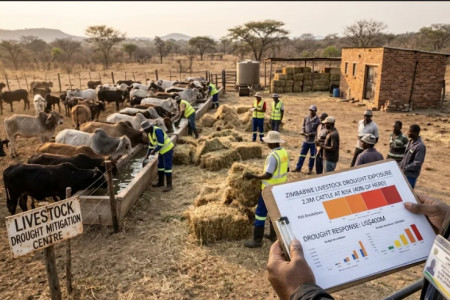
Agricultural finance presents a different risk profile, with repayment capacity exposed to rainfall, crop performance, livestock conditions and seasonal cash flows. Zimbabwe's 2027 Fiscal Risk Statement identifies severe drought as a material economic risk, with an 18% agricultural contraction capable of reducing growth and increasing public expenditure requirements. A specialised lender financing agricultural production would need to incorporate these risks into loan terms, collateral policies and credit monitoring arrangements.
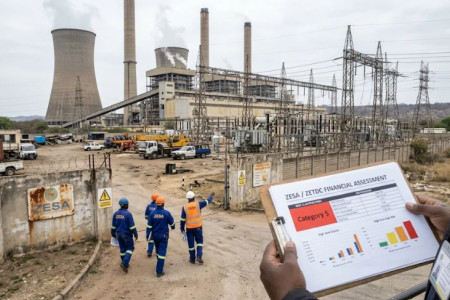
Treasury's experience with existing government guaranteed lending provides relevant context. The Fiscal Risk Statement identifies six borrowers presenting elevated or high fiscal risks, including enterprises undergoing corporate rescue, liquidation and recovery proceedings. These facilities differ from the proposed Veterans Microfinance Bank, but they demonstrate the financial consequences that can arise where publicly supported borrowers experience difficulty meeting repayment obligations.
The challenge for the new institution will be to maintain commercial lending discipline while serving a defined beneficiary group. Eligibility for support establishes the intended market, while repayment capacity determines the sustainability of the financing provided. A viable bank will require clear credit approval standards, appropriate loan pricing, reliable recovery procedures and an ability to distinguish between commercially repayable finance and assistance that may require direct budgetary support.
The planned transition into a fully fledged deposit taking institution introduces additional requirements. Cabinet envisages a development period of three to four years encompassing licensing, governance, pilot operations, digital expansion and eventual national rollout. Taking deposits would create direct obligations to customers and require compliance with the applicable prudential framework, including capital adequacy, liquidity management, deposit protection and risk governance requirements. Progression to that stage will depend on regulatory approval and the bank's demonstrated operational and financial capacity.
The institution will enter a financial services market that already includes commercial banks, microfinance providers and specialised institutions supporting financial inclusion. Its commercial contribution will depend on the financing gap it can address, its distribution costs and the quality of services delivered to veterans who remain underserved. A credible business plan should establish the number of prospective borrowers, anticipated loan sizes, sector allocations and the repayment performance required to sustain operations.
Cabinet has cited the Philippine Veterans Bank, Rwanda's Zigama Credit and Savings Bank and Uganda's Wazalendo Savings and Credit Cooperative Society as international examples. These institutions operate within different legal and financial frameworks, making their experience useful for evaluating governance, member participation, credit discipline and institutional sustainability. The applicability of their models to Zimbabwe will depend on the proposed ownership structure, available capital and the specific requirements of the domestic banking market.
Equity Axis takes the view that the establishment of the Veterans Microfinance Bank offers an opportunity to improve the productive utilisation of assets held by veterans, with the economic benefits dependent on financial discipline and transparent governance. Treasury should disclose the bank's initial capital requirement, funding source, projected loan portfolio and any guarantees or continuing fiscal commitments before the institution commences operations. Its board should establish measurable targets covering loan recovery, operating costs, productive investment and capital adequacy, supported by regular public reporting. POSB's responsibilities should also be clearly defined, while the RBZ should apply the relevant licensing and supervisory standards throughout the institution's development.
The economic value of the initiative will depend on its ability to convert underutilised agricultural land, mining claims and businesses into sustainable commercial activity. Access to finance can improve production and enterprise development where borrowers have viable projects and repayment arrangements aligned with their cash generation. Strong credit administration will be essential to preserving the initial capital and allowing the institution to expand its financing capacity.
Zimbabwe's decision to establish a dedicated veterans' bank creates a new channel for productive financing within the government's broader economic empowerment programme. The next stage requires a clear explanation of how the institution will be capitalised, governed and measured against its commercial objectives. With public resources providing its foundation, financial transparency and demonstrable lending performance will be central to its long term sustainability.
Equity Axis News