- Treasury estimates that a 15% decline in international mineral prices could reduce Zimbabwe's 2027 revenue by US$692 million and widen the fiscal deficit from 0.5% to 1.5% of GDP
- Gold has retreated by approximately one third from its January 2026 record levels, increasing scrutiny of the commodity price assumptions underpinning the National Budget
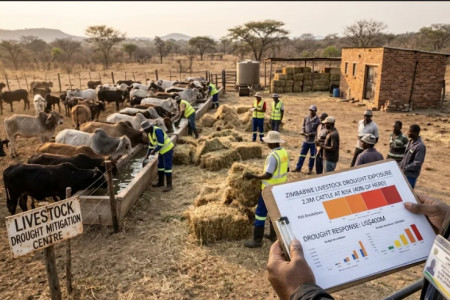
- A severe drought could separately increase the fiscal deficit by US$512 million, while Treasury classifies public debt as distressed and identifies serious financial weaknesses among major state enterprises

Harare – Zimbabwe's 2027 National Budget faces a potential US$692 million revenue shortfall from weaker international mineral prices, with the recent collapse in gold prices exposing the country's dependence on commodity earnings to sustain government expenditure. The warning comes from Treasury's 2027 Fiscal Risk Statement, published on 19 November, which estimates that a 15% decline in mineral prices would reduce projected revenue from US$12.5 billion to US$11.8 billion and widen the fiscal deficit threefold.
Gold, Zimbabwe's largest mineral export, has already experienced a substantial correction from its January record levels, intensifying attention on the assumptions supporting next year's fiscal projections.
According to the Ministry of Finance, the commodity shock would reduce revenue collections by ZiG19.3 billion, equivalent to approximately US$692 million, while planned expenditure would remain at ZiG358.3 billion. The resulting fiscal deficit would increase from ZiG8.8 billion to ZiG28.1 billion, equivalent to approximately US$1 billion, with public debt rising from a projected 34.7% to 35.7% of GDP. These calculations expose the sensitivity of Zimbabwe's fiscal position to changes in international mineral markets, particularly as government prepares to increase revenue collection relative to the size of the economy.
The warning has acquired greater urgency following the recent deterioration in gold prices. The precious metal climbed towards US$5,600 per ounce during its historic January rally before retreating sharply during the year. By 23 November, spot gold was trading around US$3,655 per ounce, having recovered from a more than one year low recorded the previous week. The correction amounts to approximately one third of the metal's January peak, introducing a substantial change in the external pricing environment facing Zimbabwe's gold producers and fiscal authorities.
The significance of this decline depends on the commodity price incorporated into Treasury's revenue projections. The Fiscal Risk Statement does not disclose the precise gold price assumed in the 2027 Budget, limiting the ability to calculate the revenue adjustment already captured within the government's forecasts. A price decline measured against the market's highest level is also different from a decline against the average price used for fiscal planning. Nevertheless, the magnitude of the correction makes the government's mineral revenue assumptions an important area for scrutiny as the country approaches the new financial year.
Gold has become increasingly important to Zimbabwe's export performance, supported by rising deliveries from small scale and large scale producers. According to Fidelity Gold Refinery statistics, deliveries reached approximately 41.4 tonnes during the first ten months of 2026, including a record 5.52 tonnes in October. Higher production provides some protection against falling international prices by increasing the quantity available for export. The extent of that protection depends on realised selling prices, production costs and the ability of producers to sustain output as margins adjust.
The fiscal exposure extends beyond export receipts. Mineral prices affect royalties, corporate income taxes, the profitability of mining operations and the foreign currency generated by the sector. Lower prices can reduce the taxable income of producers while weakening the commercial returns available for exploration, capital investment and production expansion. Treasury's model also shows that a 15% mineral price decline would reduce the primary fiscal balance from a marginal surplus of ZiG162 million to a deficit of ZiG19.2 billion, increasing the amount of financing required to support government operations.
The pressure becomes more pronounced when assessed against Zimbabwe's recurrent expenditure commitments. Treasury projects compensation of employees at ZiG167.3 billion, equivalent to approximately US$6 billion, during 2027. Under the baseline revenue forecast, salaries would absorb 47.9% of government collections. A mineral price shock would raise the proportion to 50.7%, leaving a smaller share of revenue available for goods and services, capital development and other expenditure commitments. The wage bill is assumed to remain unchanged in Treasury's scenario, making the deterioration a direct consequence of weaker revenue performance.
Zimbabwe's baseline fiscal framework already requires stronger revenue mobilisation during a period of slower economic growth. Treasury projects GDP growth moderating from 5% in 2026 to 3.5% in 2027, while revenue increases from 16.4% to 18.1% of GDP. Expenditure is expected to rise from 16.6% to 18.6% of GDP, producing a planned deficit of 0.5%. Achieving the revenue target will depend on tax compliance, economic activity and the performance of major revenue generating sectors, with declining commodity prices capable of increasing the pressure on domestic revenue measures.
Agriculture introduces a separate fiscal vulnerability. Treasury's severe El Niño scenario assumes an 18% contraction in agricultural output, reducing economic growth to approximately 2% and increasing expenditure requirements for food security and social protection. Under these conditions, government spending would rise by US$333 million while revenue collections weaken, causing the fiscal deficit to increase from US$314 million to approximately US$828 million. The deterioration amounts to US$512 million relative to the baseline, establishing the potential fiscal cost of another severe agricultural season.
The implications extend into consumer markets and industrial supply chains. Lower agricultural production can increase requirements for imported grain, place pressure on food prices and reduce household purchasing power in farming dependent communities. Food manufacturers, retailers and other businesses exposed to agricultural raw materials would face changes in input costs and consumer demand. Higher electricity imports could introduce further costs if adverse rainfall conditions also constrain hydropower generation. These effects would depend on the severity and geographical distribution of rainfall deficits, the availability of strategic grain reserves and the capacity of domestic producers to maintain output.
Treasury has developed a drought mitigation framework involving grain reserves, irrigation development, livestock protection and social assistance. Strategic grain holdings reached 365,000 tonnes at the end of October 2026, with a target of 600,000 tonnes during 2027. Government has also subscribed to African Risk Capacity sovereign drought insurance at a premium of US$3.4 million, providing a maximum payout of US$12.8 million. The insurance arrangement offers targeted protection, although the maximum payout represents a small proportion of the potential fiscal deterioration under Treasury's severe drought scenario.
The fiscal vulnerabilities arise against an already constrained debt position. Treasury's assessment classifies Zimbabwe's public debt as distressed and unsustainable under the baseline framework, citing elevated servicing obligations and reliance on expensive domestic financing. The Fiscal Risk Statement identifies the concentration of ZiG denominated debt maturities within two years as an additional refinancing risk. Adverse revenue developments could therefore increase financing requirements at a time when the government is attempting to resolve historical arrears and restore access to affordable international capital.
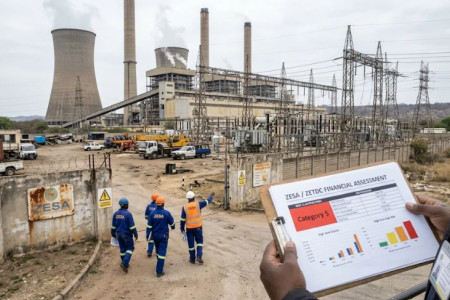
The government's exposure also extends to financially distressed state enterprises. Treasury's assessment of 2025 financial statements places ZESA Enterprises in the highest risk category across all seven profitability, liquidity and solvency indicators. Zimbabwe Electricity Transmission and Distribution Company also receives the highest overall risk classification, while TelOne, the Industrial Development Corporation of Zimbabwe and Aurex fall within the second highest category. Persistent financial weaknesses among these entities could generate additional demands for government support, debt assumption and intervention, particularly where essential services and strategic infrastructure are involved.
Therefore, the 2027 Fiscal Risk Statement exposes the vulnerability of Zimbabwe's revenue strategy to commodity prices and the limited room available to absorb adverse economic conditions. The gold price correction makes it necessary for Treasury to disclose the mineral price assumptions underlying its revenue forecasts and the corresponding sensitivity of royalty and corporate tax collections.
Government should also establish clear expenditure adjustment priorities in the event of a revenue shortfall, protecting essential services and productive investment while limiting new borrowing commitments. Greater financial discipline among state enterprises and more reliable revenue forecasting will be important to containing fiscal pressures as the country enters a period of slower projected growth.
Zimbabwe's 2027 Budget is built around higher revenue mobilisation, contained expenditure growth and continued macroeconomic stability. The commodity price correction and potential agricultural risks place these assumptions under increasing scrutiny. The government's ability to preserve its fiscal objectives will depend on how quickly revenue expectations are adjusted to economic conditions and how effectively expenditure commitments are managed as mineral markets, agricultural production and international financing conditions evolve.
Equity Axis News