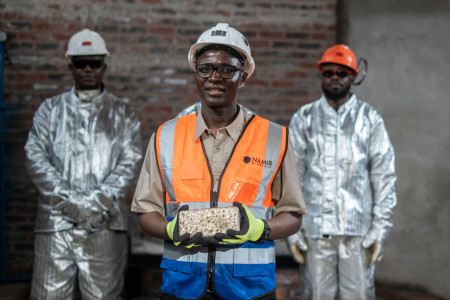
- Namib Minerals poured its first gold at Redwing Mine on 23 November 2026, completing an accelerated restart influenced by Zimbabwe's January 2027 deadline for foreign owned small and medium scale gold operations
- The company reduced its 2026 production guidance to between 26,500 and 27,000 ounces, while its ambition to reach 300,000 ounces annually across its portfolio requires substantial development beyond its established production base
- Namib reported a US$42.9 million working capital deficit at June 2026 and higher production costs per ounce, placing greater importance on the commercial performance of Redwing and the financing of subsequent expansion

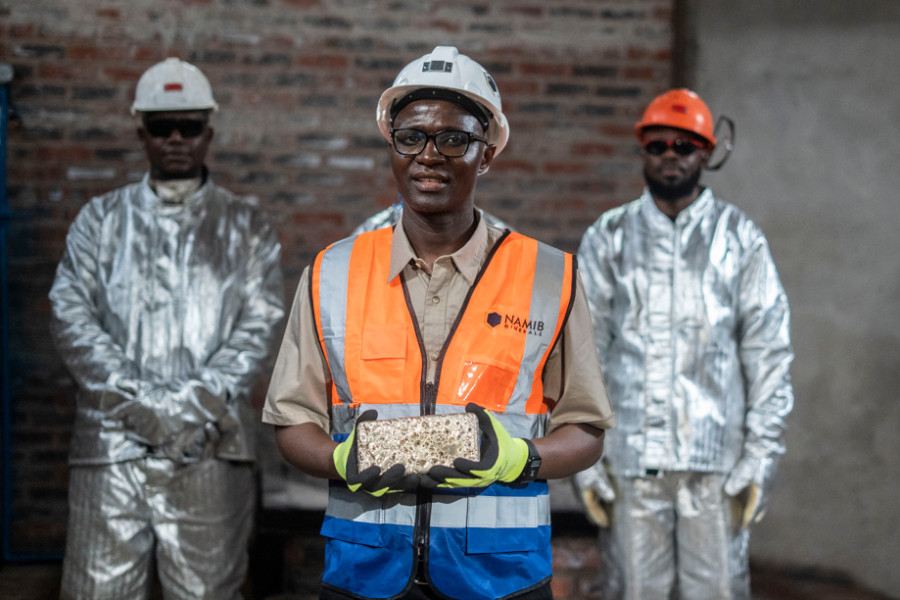
Harare – Nasdaq listed Namib Minerals has returned Redwing Mine in Penhalonga to gold production seven years after operations ceased, accelerating the restart to meet Zimbabwe's changing mining ownership requirements while pursuing an ambitious expansion of its gold portfolio.
The first pour on 23 November 2026 establishes Redwing as the company's second producing asset alongside How Mine, marking an operational breakthrough for a business whose long term ambition is to produce approximately 300,000 ounces annually. The immediate commercial challenge is to establish sustainable output from a mine that has yet to demonstrate its operating costs and production capacity under the new ownership structure, with expansion requirements extending beyond the current restart programme.
According to Namib's latest announcement, the first gold pour followed the rehabilitation and recommissioning of underground infrastructure and processing facilities, completing the November production target established earlier in the month. Chief Executive Tulani Sikwila described the achievement as the beginning of the next operational phase, placing emphasis on consistent production, underground performance and the planned increase in ore processing capacity. The restart also follows the completion of dewatering in September, which restored access to underground workings and enabled the company to accelerate mining activities.
The acceleration carries a regulatory dimension that is central to understanding Namib's operational decisions. In its 1 October financial results, the company acknowledged that Zimbabwe's new gold mining ownership framework required foreign operators to move above prescribed production and capital investment thresholds by January 2027. Namib stated that How Mine already operated above the thresholds, while Redwing, then under care and maintenance, did not. The company subsequently brought forward production using developed underground areas and existing processing infrastructure, with the initial restart intended to operate above the prescribed thresholds.
Zimbabwe's policy announced in May 2026 reserves small and medium scale gold mining for citizens and wholly Zimbabwean owned entities. The framework identifies operations producing up to 20 kilograms of gold monthly or involving capital investment of up to US$15 million, with affected foreign operators required to regularise their status by 1 January 2027. Namib's decision to accelerate Redwing therefore demonstrates the influence of the ownership framework on investment timing and mine development priorities. Its first gold pour confirms production has resumed, while the company's compliance position will depend on the applicable investment and production criteria and the assessment of the responsible authorities.
The restart has advanced ahead of the larger technical programme intended to establish Redwing's long term production potential. Namib is undertaking a definitive feasibility study to redesign the mine for increased capacity, with the current technical phase expected to conclude in early 2027 and further resource definition work to follow. The company has indicated that initial production activities will proceed alongside these studies, enabling it to generate operational information before taking decisions on the scale and financing of a larger redevelopment.
The distinction is important because a first gold pour establishes the functionality of the initial mining and processing system, while sustained production requires reliable ore supply, adequate grade, metallurgical recovery and equipment availability. Redwing's historical production of approximately 650,000 ounces between 1981 and 2023 provides evidence of previous mining activity. Namib also reports approximately 1.18 million ounces in measured and indicated mineral resources at the asset, although the economic extraction of those resources will depend on the final mine design, costs, recoveries and applicable feasibility assessments.
The company's growth ambitions extend considerably beyond its current operating scale. Namib produced approximately 25,000 ounces in 2025 through How Mine, with the initial 2026 guidance targeting between 28,000 and 31,500 ounces. That range was subsequently revised down to between 26,500 and 27,000 ounces in October, following changes to the commissioning and ramp up timetable for How Mine's expanded milling capacity. At the upper end of the revised guidance, the longer term 300,000 ounce ambition represents more than eleven times the company's anticipated 2026 production.
The company's first half operating figures explain why growth in output remains important. How Mine produced 11,373 ounces during the six months to June 2026, compared with 12,741 ounces in the corresponding period of 2025. Ore milled remained broadly stable at approximately 233,000 tonnes, while average head grade declined from 1.9 grams per tonne to 1.7 grams. Gold recovery also weakened marginally to 88%. The lower grade reduced the amount of gold recovered from a similar quantity of processed material, demonstrating the influence of ore quality on production even when plant utilisation remains relatively consistent.
Namib has responded by expanding How Mine's milling capacity from approximately 40,500 tonnes to 55,000 tonnes monthly, representing an increase of approximately 36%. The investment is intended to improve the mine's ability to process additional ore and compensate for fluctuations in grade. The commercial return will depend on the availability of sufficient mineable material, the stability of the expanded plant and the cost of processing each additional tonne. Redwing introduces another operating asset into this portfolio, with its own underground development and equipment requirements.
For Redwing, the next major constraint concerns the capacity to move ore from underground workings to the processing plant. Namib expects to receive a higher capacity winder by the end of the first quarter of 2027, with installation and commissioning intended to support increased underground material movement. The company has identified this equipment as a critical component of the production ramp up, alongside the need to establish stable mining and processing performance. Formal production and cost guidance for 2027 is expected during the first quarter, when sufficient operating data becomes available.
The expansion requirements arise against a financial position that requires careful management. Namib reported cash of US$1.8 million at the end of June 2026, with current assets of US$20.4 million and current liabilities of US$63.3 million. The resulting working capital deficit amounted to US$42.9 million. The company has explained that part of the reported liabilities comprises obligations settled through shares, amounts associated with Redwing and Mazowe entities and liabilities matched by indemnification assets. These distinctions are relevant to assessing immediate cash requirements, although the overall position establishes the importance of liquidity management as development expenditure increases.
The company subsequently strengthened its financing arrangements, drawing a US$5 million Ecobank facility in July and securing an agreement to expand an existing BancABC facility by US$6.5 million in September. Namib has stated that the initial Redwing restart would be financed through internally generated cash flow without a new equity issuance. The financing of a larger redevelopment remains a separate consideration that will depend on the conclusions of technical studies, expected project returns and the availability of funding on commercially acceptable terms.
Namib's first half earnings also demonstrate the influence of gold prices on its operating performance. Revenue increased by 40% to US$50.8 million, while adjusted EBITDA rose by 76% to US$19 million, supported principally by stronger realised gold prices and improvements in operating expenditure. The average realised price after royalties increased by 48% to US$4,195 per ounce, offsetting weaker production volumes. Operating cash flow increased to US$9.3 million, although investment expenditure reached US$10.7 million as the company funded the How Mine expansion and Redwing restart.
The cost profile deserves particular attention as Namib expands into additional mines. Group all in sustaining costs increased from US$2,462 to US$3,078 per ounce during the first half, influenced by lower production, royalties and corporate expenditure associated with its Nasdaq listing. How Mine's own sustaining costs increased from US$2,265 to US$2,534 per ounce. Namib subsequently revised its full year group cost guidance to between US$2,650 and US$2,850 per ounce, establishing the importance of stronger production volumes in spreading fixed operating and corporate costs across a larger output base.
The company's Nasdaq valuation adds another consideration to its growth strategy. Namib shares closed at approximately US$0.61 on 23 November, reflecting a market in which the company's development ambitions have yet to translate into a sustained operating record across multiple assets. Future financing arrangements will need to account for the cost of capital, existing liabilities and the level of confidence investors place in Redwing's production performance. The first pour provides an operating milestone, while recurring cash generation and independently supported development economics will be more influential in determining the financial capacity available for expansion.
Redwing's return also has implications for Penhalonga, where the closure of formal mining operations contributed to a prolonged period of uncertainty surrounding employment and the management of mining activity at the site. The restoration of a regulated commercial operation creates opportunities for formal employment, local procurement and more accountable management of environmental and occupational safety obligations. The extent of these benefits will depend on the workforce employed, the value of contracts awarded locally and the standards maintained as underground production expands.
For Zimbabwe's gold industry, the reopening contributes to a broader effort to restore production from previously inactive mining assets. Gold deliveries reached approximately 41.4 tonnes during the first ten months of 2026, supported by significant contributions from small scale and large scale producers. The national benefit from reopening established mines will depend on the consistency of their output and the value generated through employment, royalties, investment and local procurement. Redwing's early production volumes have not yet been disclosed, preventing a reliable assessment of its immediate contribution to national deliveries.
Thus, Redwing's return establishes Namib's ability to execute an accelerated restart, while the next phase requires a substantially different level of operational and financial delivery. The company's decision to advance production in response to Zimbabwe's ownership framework demonstrates how regulatory deadlines can influence development sequencing. Namib's board must now establish the mine's sustainable monthly output, cost per ounce and cash generation, alongside the capital required to increase underground throughput. The higher capacity winder, definitive feasibility study and 2027 production guidance should provide the basis for assessing the project's commercial prospects. Expansion towards 300,000 ounces annually will require credible resource conversion, independently supported mine plans and financing arrangements consistent with projected cash flows.
The broader policy consideration concerns the balance between encouraging larger scale investment and allowing sufficient time for technically complex mining developments. Redwing's restart shows that existing infrastructure can support an accelerated return to production, although long term growth requires capital, geological work and reliable operating performance. The effects of Zimbabwe's ownership framework should therefore be assessed through actual investment, mine development and sustained production across affected operations.
Namib enters 2027 with two producing mines, an expanded processing programme at How Mine and a renewed operating platform at Redwing. The company's ability to translate those developments into higher production and sustainable financial returns will determine the commercial value of its wider ambitions. The first gold pour provides a basis for the next investment decisions, with production consistency, cost performance and financing capacity now becoming the measures through which the company's progress can be evaluated.
Equity Axis News