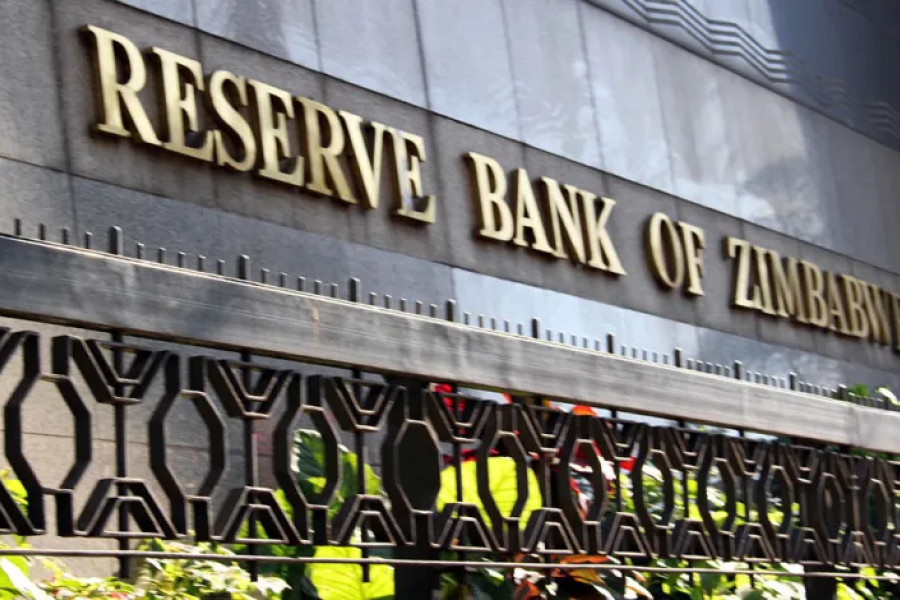
- The Reserve Bank of Zimbabwe has reduced its policy rate from 27.5% to 25%, bringing cumulative cuts since June to 10 percentage points as annual ZiG inflation remains at 4.25%
- The policy rate remains 20.75 percentage points above inflation, while productive sector lending under the Targeted Finance Facility is capped at 20%, maintaining substantial borrowing costs for businesses
- Foreign currency reserves have reached approximately US$2 billion, although the RBZ has postponed the launch of its new interbank foreign exchange trading platform to the first quarter of 2027

Harare – The Reserve Bank of Zimbabwe (RBZ), the country's monetary authority responsible for currency stability, interest rate policy and banking sector regulation, has reduced its benchmark lending rate to 25%, extending monetary policy normalisation as inflation remains in single digits.
The latest reduction takes cumulative interest rate cuts to 10 percentage points since June 2026, although the policy rate continues to exceed annual ZiG inflation by more than 20 percentage points. The unusually wide margin exposes the financing conditions facing an economy that has achieved considerable price stability while struggling to translate those gains into affordable domestic credit.
In resolutions of its Monetary Policy Committee meeting held on 27 November 2026, the central bank reduced the policy rate by 2.5 percentage points from 27.5% to 25%, following earlier reductions from 35% to 30% in June and subsequently to 27.5% in September. The MPC also lowered the Targeted Finance Facility rate from 12.5% to 10%, while reducing the maximum all inclusive lending rate to productive sectors under the facility from 22.5% to 20%. Statutory reserve requirements remain at 30% for demand deposits and 15% for savings and time deposits.
RBZ Governor John Mushayavanhu, in the statement issued following the meeting, said there was scope to continue aligning the policy rate with inflation developments. The central bank described the adjustment as part of its monetary policy normalisation programme, aimed at gradually reducing real interest rates towards levels compatible with economic growth while maintaining price and exchange rate stability.
Annual ZiG inflation stood at 4.25% in November, unchanged from October, while averaging approximately 4% during the first eleven months of 2026. The stability follows a substantial decline in inflation from 19% in November 2025 and considerably higher levels earlier that year. The central bank now expects annual inflation to average 4% in 2026 and approximately 5% in 2027, supported by restrained money supply growth and relatively stable foreign exchange conditions.
The reduction in inflation has materially changed the relationship between nominal interest rates and the cost of money after accounting for price increases. At the current 25% policy rate and 4.25% annual inflation, the simple difference is 20.75 percentage points. Using the compounded real interest rate calculation produces approximately 19.9%, although both measures use observed inflation and cannot establish the precise forward looking real cost faced by individual borrowers.
The comparison with November 2025 is revealing. At that time, the policy rate stood at 35%, against annual inflation of approximately 19%, producing a simple difference of 16 percentage points. Despite cumulative nominal rate reductions of 10 percentage points, the current inflation adjusted policy spread remains wider than a year earlier because consumer price growth has declined more rapidly.
The highest such spread during 2026 occurred before the first policy reduction, when inflation had already fallen sharply while the benchmark remained at 35%. Subsequent cuts have narrowed the difference, although the current level demonstrates that monetary conditions remain restrictive relative to prevailing inflation.
The commercial consequences are particularly important for businesses seeking finance for machinery, inventory, agricultural production and industrial expansion. The revised 20% lending ceiling applies to eligible productive sector lending through the Targeted Finance Facility. Against November inflation of 4.25%, the nominal lending rate exceeds observed inflation by 15.75 percentage points, illustrating the substantial financing burden that remains even under the preferential arrangement.
For a business borrowing ZiG1 million at an all inclusive annual rate of 20%, the indicative annual financing charge would be ZiG200,000 before considering repayments during the year and the specific contractual structure. Such costs require sufficiently strong operating margins and dependable cash flows, limiting the range of commercially viable investment projects.
The wider financial system continues to exhibit limited lending intensity. According to the World Bank's September 2026 Growth and Jobs Report, Zimbabwe's private sector credit represents approximately 6.5% of GDP, compared with substantially deeper credit markets in Kenya and South Africa. Banking sector data for June also showed deposits growing faster than customer lending, reducing the aggregate loan to deposit ratio to approximately 59.6%.
High borrowing costs contribute to this problem, alongside limited bankable projects, credit risk, collateral constraints and the short maturity of customer deposits. Lower policy rates can improve financing affordability, although meaningful increases in productive lending require banks to originate longer term assets supported by reliable repayment capacity.
The unchanged reserve requirements also influence banking liquidity. With 30% of demand deposits subject to statutory reserves, banks must account for substantial regulatory liquidity obligations when determining the resources available for lending and investment.

The RBZ's ability to reduce interest rates has been supported by stronger foreign currency receipts and increased reserve accumulation. Foreign currency inflows rose 29.4% to approximately US$17.2 billion between January and October 2026, compared with US$13.3 billion during the corresponding period in 2025.
The increase has supported foreign currency reserves of approximately US$2 billion, equivalent to about two months of import cover. The exchange rate has remained within a relatively narrow range of ZiG25 to ZiG27 against the United States dollar, reinforcing confidence in the local currency and helping contain imported inflation.
The central bank also reported continued compliance with reserve money targets under Zimbabwe's ten month International Monetary Fund Staff Monitored Programme. The final IMF review is scheduled for December 2026, with the RBZ expecting the programme's quantitative targets and structural benchmarks to be achieved.
These developments have improved the macroeconomic conditions supporting monetary policy normalisation. The durability of those gains will depend on continued fiscal restraint, foreign currency availability and maintaining money supply growth within the economy's capacity to absorb additional liquidity.
The November MPC statement introduced a further development affecting Zimbabwe's financial markets. The RBZ has postponed the introduction of its Foreign Exchange Interbank Market Enhanced Trading System, known as FEXIMETS, by another three months, with implementation now targeted for the first quarter of 2027.
The central bank said user acceptance testing had been completed with authorised dealers, although additional time was required for participating banks to finalise internal systems and operational arrangements.

The platform is intended to strengthen electronic foreign exchange trading, improve market coordination and support more transparent interbank currency transactions. Its implementation could improve information on foreign currency supply and demand, while providing a stronger operational basis for market based exchange rate determination.
The postponement demonstrates that financial market reform continues to face execution requirements even as monetary conditions improve. The eventual commercial value of the platform will depend on participation by banks, transaction volumes, access to liquidity and the effectiveness of price discovery.
The MPC also welcomed proposals in the 2027 National Budget to reduce the Intermediated Money Transfer Tax by 0.25 percentage points on both United States dollar and ZiG transactions. Lower transaction costs could support formal banking activity and improve the attractiveness of local currency payments.
Growth prospects introduce additional policy considerations
The RBZ expects Zimbabwe's economy to expand by approximately 5% in 2026, supported by mining, agriculture and improved macroeconomic stability. Growth is projected to moderate to 3.5% in 2027, partly because of anticipated El Niño conditions affecting agricultural output.
The outlook creates additional considerations for interest rate policy. Agricultural production influences food prices, rural incomes, manufacturing demand and the country's import requirements. A severe deterioration in rainfall could consequently increase inflationary pressures while weakening domestic demand.
International energy prices and geopolitical developments also remain important sources of risk, particularly for an economy dependent on imported fuel and selected industrial inputs.
The central bank has therefore maintained its commitment to monetary restraint while progressively reducing interest rates, with future adjustments dependent on incoming inflation, economic activity and external conditions.
Analysis
Zimbabwe's third policy rate reduction in 2026 confirms the gradual adjustment of monetary conditions following a substantial improvement in inflation and foreign currency stability. The cumulative 10 percentage point reduction is considerable, although the policy rate remains approximately 20.75 percentage points above observed inflation, preserving restrictive financing conditions for domestic businesses.
The central bank has additional room to normalise interest rates if inflation remains contained and foreign currency reserves continue supporting exchange rate stability. The immediate priority should be ensuring that lower benchmark rates translate into improved financing conditions for productive borrowers, accompanied by stronger credit assessment and sustainable lending structures.
The current policy framework also needs to support development of domestic money markets. The ZiG Denominated Term Deposit Facility and the proposed resumption of Government securities auctions could strengthen the local currency yield curve, allowing lending and investment rates to be determined through a broader range of market instruments.
The effectiveness of further policy adjustments should be assessed through actual lending rates, growth in productive credit, deposit mobilisation, asset quality and the volume of longer term investment financing. A lower benchmark rate provides limited economic benefit if commercial banks remain unable to originate affordable and performing loans.
Zimbabwe enters 2027 with stronger foreign currency reserves and substantially lower inflation than a year earlier, although weaker projected economic growth and potential climatic shocks complicate the outlook. The RBZ's challenge is to preserve the stability achieved during 2026 while progressively lowering the financing costs that continue to constrain productive investment.
Equity Axis News