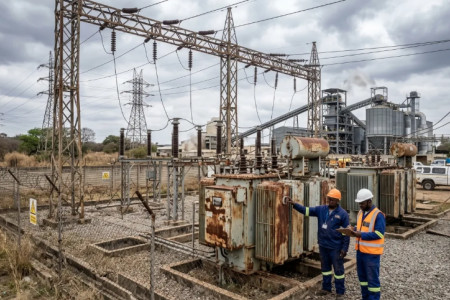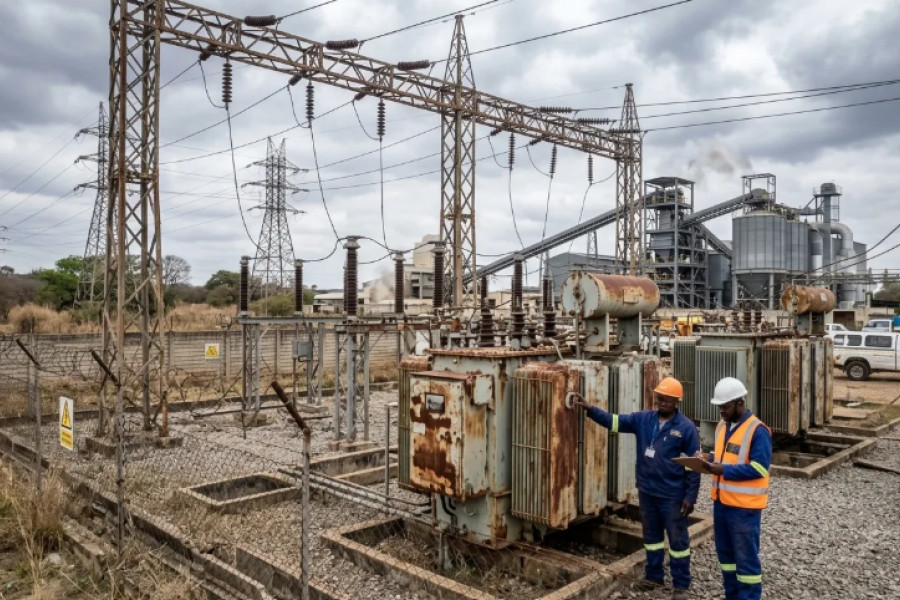
- ZESA requires US$2.4 billion to rehabilitate its ageing electricity network after two decades of tariffs averaging US2 cents per kilowatt hour against procurement costs of US9.8 cents
- Zimbabwe now has the highest average electricity tariff among reporting SADC countries at US16.08 cents per kilowatt hour, while its general mining tariff is 82% above the regional benchmark
- ZETDC carries a ZWG29.9 billion working capital deficit, with Government opening electricity distribution to private investors as the utility struggles to finance rehabilitation and expand customer connections

Harare- Zimbabwe's State owned electricity utility ZESA, responsible for electricity generation, transmission and distribution across the country, requires US$2.4 billion to rehabilitate its ageing national grid despite now charging the highest average electricity tariff among reporting Southern African countries. The investment requirement exposes the accumulated cost of two decades of inadequate infrastructure financing, during which electricity tariffs reportedly recovered only a fraction of procurement costs. Zimbabwe has subsequently moved towards considerably higher electricity charges, leaving mines, manufacturers and households paying some of the region's most expensive tariffs while the network continues to suffer from ageing equipment, inadequate redundancy and persistent faults.
Speaking at the November 2026 launch of the State of the Mining Industry Report, ZETDC senior manager for electricity trading and operations Engineer John Diya said the utility required approximately US$2.4 billion to rehabilitate its transmission and distribution infrastructure. He attributed the deterioration to prolonged underinvestment during a period when tariffs averaged US2 cents per kilowatt hour against electricity procurement costs of approximately US9.8 cents. The expenditure would finance replacement of ageing equipment, rehabilitation of transmission infrastructure and additional network capacity to improve reliability.
“So we tended to neglect the power system and hence the frequent breakdowns that we experienced,” Diya said, explaining the consequences of prolonged underinvestment. The utility's assessment identified substations operating without adequate alternative transmission routes, leaving customers vulnerable whenever a major line or transformer fails. The findings establish the substantial infrastructure expenditure required to restore reliability across an electricity system that has undergone significant changes in generation capacity and pricing.
The historical tariff structure meant that electricity charges recovered approximately 20.4% of the stated procurement cost, leaving a difference of US7.8 cents per unit before accounting for other operating expenses. Such pricing constrained the financial resources available for network maintenance, equipment replacement and infrastructure expansion. The cumulative effect is evident in ageing transformers, vulnerable transmission routes and distribution assets requiring extensive rehabilitation.

The financial consequences extended across the electricity value chain. ZESA previously estimated that tariff arrangements between 2012 and 2022 contributed to approximately US$500 million in losses, including the effects of preferential electricity pricing for selected industrial consumers. These losses constrained the utility's capacity to maintain infrastructure and expand connections, while inflation and exchange rate instability further complicated the recovery of operating costs.
Zimbabwe now carries the region's highest tariffs
The subsequent adjustment in electricity pricing has created a different challenge for the country's productive sectors. According to the Eswatini Energy Regulatory Authority's regional comparison, based on information submitted by Southern African electricity regulators as at 31 March 2026, Zimbabwe recorded an average tariff of US16.08 cents per kilowatt hour, the highest among reporting SADC countries. Eswatini followed at US15.93 cents, establishing Zimbabwe's position at the upper end of the regional electricity cost structure.
The comparison is particularly consequential for mining, where electricity represents a substantial component of production expenditure. The Chamber of Mines of Zimbabwe places the country's general mining tariff at US14.21 cents per kilowatt hour, compared with a regional average of US7.80 cents. This represents an 82% premium, while competing mining jurisdictions such as South Africa and Zambia charge approximately US9.20 cents and US5.30 cents respectively.
Zimbabwe's mining electricity tariff is consequently more than one and a half times South Africa's and approximately 2.7 times Zambia's. For energy intensive operations involving mineral processing, smelting, crushing and underground ventilation, these differences directly influence operating costs and the commercial returns associated with new investment.
The tariff disparity becomes more significant as Zimbabwe seeks to expand domestic mineral beneficiation. Processing facilities require dependable electricity at commercially sustainable prices, particularly where international commodity markets determine selling prices and producers have limited ability to transfer higher operating costs to customers.
The Chamber of Mines has identified electricity pricing and supply reliability among the principal concerns facing mining companies preparing expansion programmes. Higher tariffs can weaken the economics of domestic processing investments, particularly where neighbouring countries offer lower electricity costs and more established industrial infrastructure.
Zimbabwe's earlier tariff adjustments have improved the basis for recovering electricity supply costs, although the continued infrastructure deficit places pressure on the utility's financial position. Further increases would need to be assessed against the ability of productive sectors to absorb additional costs, particularly as the country seeks to attract investment into energy intensive manufacturing and mineral processing.

The commercial challenge now extends beyond recovering the cost of electricity purchases. ZESA must improve reliability and expand network capacity while protecting the competitiveness of customers whose activities contribute substantially to national output, exports and employment.
Zimbabwe has invested substantially in electricity generation, including the commissioning of Hwange Units 7 and 8, which added approximately 600MW of installed capacity. The expansion strengthened the country's generating infrastructure and contributed to improved electricity availability during periods of favourable operating conditions.
Transmission and distribution investment has progressed more slowly, leaving sections of the network vulnerable to equipment failure and insufficient capacity. Electricity generated at Hwange, Kariba or independent power projects must pass through transmission lines, substations and distribution infrastructure before reaching productive customers. Faults within that network can interrupt supply even when generating capacity is available.
The country's electricity system also remains exposed to generation constraints. Hwange Units 7 and 8 entered planned maintenance on 15 November 2026, with scheduled returns in January 2027, while reduced water allocations at Kariba are expected to affect hydroelectric generation. Zimbabwe continues to rely on regional electricity imports to supplement domestic production during periods of insufficient supply.
The network rehabilitation requirement therefore coincides with continuing investment needs in electricity generation. Maintaining generating capacity without addressing transmission and distribution weaknesses would limit the economic benefits of additional power projects, particularly as mining, irrigation and manufacturing demand increases.
Government has identified substantial investment requirements within individual distribution networks. Energy and Power Development Minister July Moyo recently disclosed that approximately US$289 million was required to rehabilitate Harare's electricity infrastructure, where ageing cables, switchgear and transformers have contributed to recurring outages.
The capital required for Harare alone is equivalent to approximately 12% of the national US$2.4 billion rehabilitation estimate, assuming comparable expenditure classifications. This illustrates the concentration of investment needs in major urban and industrial centres, alongside the considerable requirements associated with extending electricity infrastructure into underserved communities.
Financial distress complicates investment mobilisation
ZESA's infrastructure requirements are emerging against substantial financial constraints within its distribution operations. According to the Auditor General's examination of the 2025 financial statements, ZETDC recorded an operating loss of approximately ZWG10 billion and a working capital deficit of ZWG29.9 billion. Defaulted foreign loans were classified among current liabilities, creating material uncertainty over the company's ability to meet its obligations as they fall due.
The financial position restricts the utility's capacity to undertake large rehabilitation programmes through internally generated resources. Existing obligations compete with expenditure on maintenance, electricity procurement, equipment replacement and new connections, while outstanding debts complicate access to additional borrowing.
The problem also extends to cash collection. Electricity arrears involving public institutions, businesses and other consumers reduce the resources available for maintaining infrastructure. ZETDC has introduced smart metering to strengthen revenue collection and recover historical customer debts, although these measures must be sustained to improve cash generation.
The Auditor General also identified customers who had paid for electricity connections as far back as 2016 but remained unconnected because materials were unavailable. This finding demonstrates the operational consequences of inadequate liquidity, with the utility unable to complete certain connections for which payment had already been received.
Zimbabwe's electricity access ambitions require a substantial increase in connection capacity. ZETDC has historically connected fewer than 50,000 new customers annually, while targeting approximately 300,000 connections per year under its expansion programme. Achieving that rate would require at least a sixfold increase in the historical pace of network extensions, alongside greater investment in transformers, meters, distribution lines and installation capacity.
Government has introduced regulatory changes allowing private operators to participate directly in electricity distribution and retailing. Statutory Instrument 128 of 2026 establishes arrangements for independent distribution licences, opening opportunities for private investment in electricity infrastructure serving industrial customers, residential developments and underserved communities.
The reform could support network expansion through commercially structured projects, particularly where electricity demand and customer payments can be identified with sufficient certainty. Mining companies, industrial parks and large property developments could support dedicated infrastructure investments under regulated supply arrangements.
Private participation nevertheless requires reliable contractual and regulatory conditions. Investors financing long term electricity assets will assess tariff recovery, customer payment performance, construction costs and the financial obligations associated with network access. ZESA's existing debt position makes transparent project financing arrangements particularly important.
Dedicated revenue collection structures, independently verified electricity consumption and enforceable payment agreements could improve the financing prospects of selected projects. Government will also need to establish clear responsibilities for maintenance, customer connections and infrastructure ownership where private distribution networks interact with the national system.
The country's wider electricity requirements remain substantial. World Bank estimates have placed grid investment needs through 2030 at approximately US$4.4 billion, alongside projections of significant growth in peak electricity demand. These broader estimates and ZESA's US$2.4 billion rehabilitation requirement cover potentially overlapping investments and should be assessed within a coordinated national development programme.
Therefore, Zimbabwe's electricity system has moved from a prolonged period of inadequate tariff recovery into a pricing environment where average electricity charges are the highest among reporting SADC countries, while the network still requires US$2.4 billion in rehabilitation expenditure. The historical underinvestment has accumulated into substantial infrastructure liabilities, and the current tariff structure has created additional cost pressure for productive businesses operating against regional competitors.
Thus, ZESA's immediate priority should be improving the commercial efficiency of electricity delivery and mobilising financing for infrastructure rehabilitation. The utility's existing balance sheet cannot independently support the required investment, while further tariff increases risk weakening the competitiveness of mining and manufacturing businesses already paying substantially more for electricity than regional peers.
The opening of electricity distribution to private capital provides an opportunity to develop commercially viable network investments around identifiable industrial demand and dependable payment arrangements. National transmission infrastructure will require a broader financing approach involving development institutions, private investors and public sector support.
ZESA should establish a detailed rehabilitation programme identifying investment requirements by region, transmission corridor and distribution asset, with expenditure prioritised according to infrastructure failure rates, economic demand and the availability of alternative supply routes. Transparent procurement, improved collections and stronger financial reporting will be necessary to support external financing and establish confidence in the utility's ability to manage large infrastructure programmes.
The central commercial measure should be the improvement in electricity reliability and delivery costs achieved from each investment. Falling network losses, fewer equipment failures, faster customer connections and improved collection rates would demonstrate stronger operating performance and create conditions for more competitive electricity pricing over time.
Zimbabwe's productive economy is already absorbing some of Southern Africa's highest electricity charges. The additional US$2.4 billion rehabilitation requirement establishes the substantial financial consequences of historical infrastructure neglect, while the utility's liquidity constraints expose the difficulty of financing recovery through tariffs alone. A sustainable electricity sector will require investment that improves reliability, lowers delivery costs and supports the competitiveness of the mines, factories and agricultural operations expected to drive national economic growth.
Equity Axis News