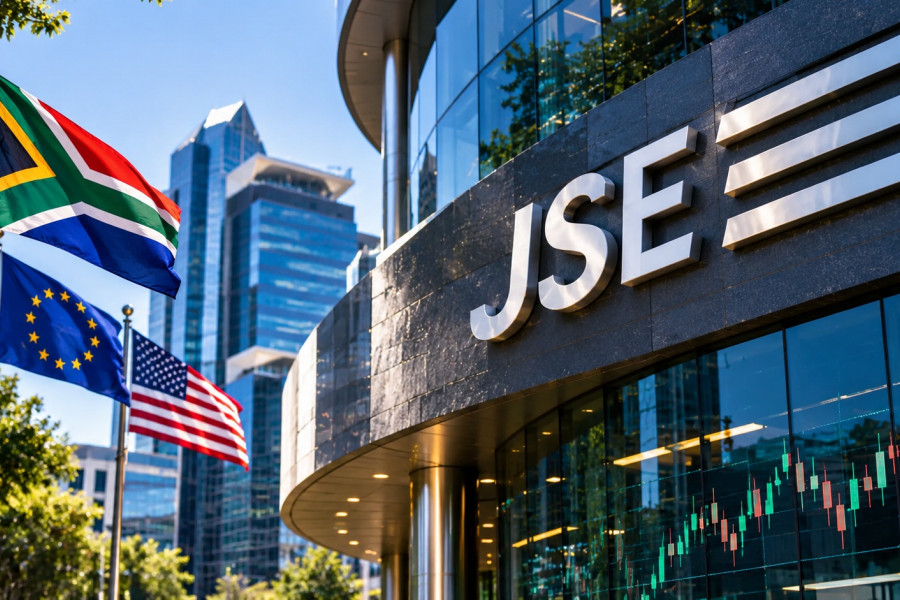
- The Johannesburg Stock Exchange is preparing to accommodate foreign currency-denominated listings as South Africa advances its synthetic financial centre reforms
- The proposed framework could strengthen Johannesburg’s competitiveness against international financial centres such as Mauritius and Dubai by retaining foreign currency investment activity within South Africa
- Zimbabwe’s Victoria Falls Stock Exchange could face stronger regional competition for foreign capital, cross-border listings and institutional investors as the JSE expands beyond the rand
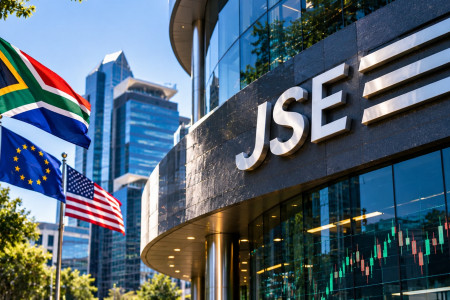
Harare – The Johannesburg Stock Exchange (JSE) is preparing for a landmark transformation that could see Africa’s largest securities exchange accommodate listings denominated in US dollars, euros and other international currencies, extending its reach beyond the South African rand and intensifying competition among the continent’s emerging international financial centres.
The proposed reforms form part of South Africa’s ambition to establish a Synthetic Financial Centre (SFC), a regulatory initiative designed to attract international financial services, retain offshore investment management activities and strengthen the country's position as a gateway for global capital into Africa.
Speaking to Business Day on the sidelines of Coca-Cola HBC’s inward listing, JSE Chief Officer of Capital Markets Helina Andhee indicated that introducing multi-currency listings represents the next major development under the proposed framework. The fixed-income market is expected to be among the principal beneficiaries, with the possibility of issuing and listing bonds denominated in dollars and euros.
With a market capitalisation of approximately R23.3 trillion following Coca-Cola HBC’s R341 billion inward listing, the JSE commands substantial market depth, institutional capacity and international investor participation. The existing restriction to rand-denominated listings, however, narrows financing options for international issuers and limits investors’ access to foreign currency-denominated securities.
Allowing companies to raise capital in multiple currencies could materially expand the exchange’s addressable market. Mining companies generating dollar revenues, multinational businesses operating across several jurisdictions and infrastructure developers requiring foreign currency financing could potentially access international capital through Johannesburg.
Mining companies generating US dollar revenues from international commodity sales could reduce exchange rate exposure by raising debt in the same currency, aligning operating cash flows with debt servicing obligations. European businesses earning revenues in euros could similarly benefit from euro-denominated financing, improving financial predictability and reducing currency-related risks.
Foreign currency listings would also allow investors to select instruments according to their preferred currency exposure, investment mandates and risk management requirements. The rand would retain its central role within South Africa’s domestic financial system. The proposed changes concern the currencies in which financial instruments may be issued and traded, rather than the replacement of the national currency.
On 21 October 2026, the South African Reserve Bank (SARB) published its draft Synthetic Financial Centre framework for public consultation, with submissions closing on 30 November 2026.The proposed centre would operate through regulatory, legal and financial arrangements rather than a geographically designated financial district.
South African financial institutions currently manage a substantial amount of offshore investment through international jurisdictions. Although the underlying investments may originate from South African pension funds, insurance companies and other investors, some of the associated fund management, administration and advisory activities take place abroad.
According to Reuters, approximately R5 trillion in South African portfolio assets are held offshore, equivalent to around US$301 billion. The JSE estimates that broader exchange control reforms could potentially attract R10 trillion in investment over time. Retaining even a modest proportion of the financial services associated with those assets could generate considerable economic benefits.
For example, bringing the management of 10% of the existing R5 trillion offshore portfolio base back to South Africa would place R500 billion in assets under locally based management. At an illustrative annual management fee of 0.5%, this could generate R2.5 billion in gross annual management fees.
The economic benefits would extend to legal services, accounting, auditing, technology, compliance, investment research and employment in specialised financial professions. Such a shift would also expand South Africa’s financial services exports without necessarily requiring the underlying investment assets to be physically repatriated.
South Africa’s proposed Synthetic Financial Centre framework is structured around two implementation phases, initially focusing on domestic management of offshore investments before expanding to foreign currency-denominated securities listings, investment funds and collateral arrangements.
Asset managers, banks, insurers and other eligible institutions would be able to conduct authorised foreign currency investment activities from South Africa, subject to regulatory oversight and existing prudential requirements. Foreign currency assets and transactions would be segregated from other domestic operations. Existing offshore investment allowances would remain applicable, preventing the framework from becoming a mechanism for unrestricted capital outflows.
The second phase could extend these arrangements to foreign currency securities listings, locally domiciled international investment vehicles and the use of foreign currency assets as collateral. Further regulatory assessment and consultation would be required before these measures become operational.
International investors would gain access to African investment opportunities through an established financial market offering greater currency flexibility, diversified financial instruments and sophisticated market infrastructure. Johannesburg already possesses an extensive network of investment banks, institutional investors, securities brokers, custodians and professional advisory firms. Greater currency flexibility could allow this existing infrastructure to serve a considerably larger international market.
Zimbabwe established the Victoria Falls Stock Exchange (VFEX) in 2020 to overcome capital-raising constraints associated with domestic currency volatility. Operating as a US dollar-denominated securities exchange, the VFEX enables companies to mobilise hard currency financing while shielding investors from direct exposure to local currency depreciation.
This proposition has become particularly important for export-oriented businesses, mining companies and international investors seeking exposure to Zimbabwean assets. South Africa’s proposed reforms could alter the regional competitive environment within which the VFEX operates.
An international mining company evaluating potential African listing destinations could eventually have the option of raising US dollar capital through either Johannesburg or Victoria Falls. The JSE would bring considerable advantages in market liquidity, institutional investor participation, research coverage, international recognition and financial infrastructure. These factors influence the cost of raising capital and the ability of investors to enter or exit positions without materially affecting securities prices.
A company choosing between two dollar-denominated exchanges would consequently assess the broader financing environment rather than currency denomination alone.
The emergence of competing African exchanges offering foreign currency-denominated instruments heightens the need for Zimbabwe to improve transaction efficiency, strengthen investor protection, deepen market liquidity and establish a more predictable regulatory environment.
The implications extend beyond securities trading to Zimbabwe’s broader ambitions under the Victoria Falls International Financial Centre, which is targeting US$10 billion in assets over five years. Zimbabwe seeks to develop Victoria Falls into an internationally competitive jurisdiction capable of attracting financial institutions, investment funds, corporate treasury operations and cross-border capital.
South Africa’s synthetic financial centre offers a competing model supported by an already sophisticated financial services industry. Zimbabwe’s opportunity lies in developing specialised financial products and services that address financing requirements across underserved African markets.
Victoria Falls could position itself as a centre for mining finance, agricultural investment funds, renewable energy financing, infrastructure project bonds, diaspora investment instruments and regional commodity-linked securities. Zimbabwe’s extensive mineral resources and agricultural potential provide an underlying economic base around which these specialised financial instruments could be developed.
The country could also explore partnerships between the VFEX and larger international exchanges, allowing domestic companies to access wider investor networks through cross-listings and coordinated capital-raising arrangements. Establishing credible arrangements for dividend repatriation, international settlement, foreign currency convertibility and dispute resolution would strengthen Victoria Falls’ attractiveness to institutional investors.
South Africa’s proposed reforms could also benefit Zimbabwean companies seeking international expansion capital. Mining companies, manufacturers, agricultural exporters and financial institutions could potentially access a deeper pool of foreign currency financing through Johannesburg, subject to applicable listing and exchange control requirements.
A Zimbabwean exporter generating US dollar revenues could, for example, raise dollar-denominated debt to finance production expansion without assuming additional rand exposure. Greater competition between regional exchanges could encourage improvements in listing processes, transaction costs and the quality of financial services available to African businesses.
The effectiveness of these opportunities would depend on the final South African regulatory framework, Zimbabwe’s own capital movement regulations and individual companies’ ability to meet international disclosure, governance and financial reporting standards.
South Africa’s proposed multi-currency reforms reflect a wider competition among African economies to capture the financial services attached to the continent’s investment flows. Johannesburg, Mauritius, Casablanca and Victoria Falls are each seeking to establish or strengthen their positions within international capital markets. The jurisdictions that succeed will require credible regulatory institutions, sophisticated financial infrastructure, transparent tax arrangements, efficient settlement mechanisms and sufficient market liquidity.
The introduction of US dollar-denominated securities marked a significant innovation in Zimbabwe’s capital markets, providing an alternative mechanism for mobilising hard currency financing. Preserving this competitive advantage will require deeper institutional development, greater market sophistication and improved regulatory efficiency as competing African exchanges introduce comparable financial instruments.
South Africa is seeking to combine the scale of its domestic financial industry with the flexibility of an international financial centre. Zimbabwe must respond by building the institutional credibility, market depth and specialised investment products necessary to make Victoria Falls a competitive destination for international capital. The competitive landscape among Africa’s financial centres will increasingly be shaped by institutional credibility, regulatory efficiency and the capacity to attract, mobilise and allocate international capital.
Equity Axis News