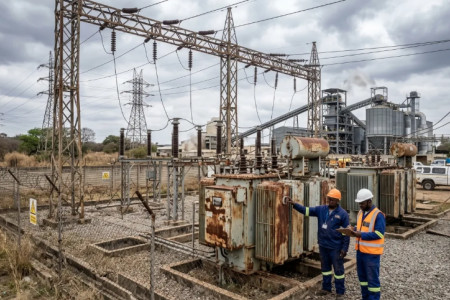
- China Railway Resources Group and Duration Gold have signed an agreement to explore more than US$600 million in investment to revive and expand four historic gold mines in Zimbabwe
- Earlier development estimates for Gaika and Vubachikwe total approximately US$375 million, equivalent to 62.5% of the proposed investment reference value, with Gaika previously marketed for sale
- Historical production plans for the two mines envisage combined annual output of approximately 235,000 ounces, equivalent to 15.7% of Zimbabwe's 2025 gold production

Harare – China Railway Resources Group, a subsidiary of Chinese infrastructure and mining conglomerate China Railway Group, is exploring investments exceeding US$600 million to revive and expand four historic gold mines owned by Duration Gold, a Zimbabwe focused gold mining and development company.
The proposed investment covers Vubachikwe in Gwanda, Gaika in Kwekwe, Athens in Mvuma and the Royal Family project in Filabusi, potentially introducing substantial production capacity into Zimbabwe's gold industry. The transaction also offers a new development route for assets that have accumulated considerable exploration expenditure but struggled to attract the financing required for commercial expansion.
In a memorandum of understanding signed in Harare on 26 November 2026, China Railway Resources Group and Duration Gold agreed to pursue the joint development of the four properties, combining the Chinese group's engineering and mining capabilities with Duration's established mineral assets. The agreement was signed by CRRG Chief Executive Officer Shi Yuan and Duration Gold Managing Director Allan Dolan, with the partners targeting investment exceeding US$600 million and the creation of more than 5,000 permanent jobs. The programme is also expected to generate additional tax revenue, facilitate technology transfer and support skills development within Zimbabwe's mining industry.
“For 21 years, my team and I have been committed to Zimbabwe,” Duration Gold Managing Director Allan Dolan said at the signing ceremony, referring to the company's longstanding efforts to develop its mineral portfolio. The agreement brings a prospective investor with international engineering experience into a portfolio containing substantial mineral resources, historical mining infrastructure and preliminary development studies. Its commercial value will depend on the financing arrangements and technical commitments subsequently established for each project.
Earlier development plans for Gaika and Vubachikwe identified approximately US$375 million in potential expenditure, representing 62.5% of the US$600 million investment reference value. Gaika's preliminary development programme carried an estimated first phase construction cost of US$175 million, while Vubachikwe's redevelopment plans outlined approximately US$200 million in capital requirements. These estimates were prepared before the latest partnership and remain subject to revisions as mine designs, operating costs, exploration requirements and processing infrastructure are assessed. They provide a useful indication of capital intensity, although the partners have not disclosed how the proposed investment would be distributed across the four properties.

Gaika is among Duration's most advanced mineral assets, with mining operations dating back to 1894 and historical production estimated at approximately 740,000 ounces. Subsequent exploration programmes included more than 22,000 metres of drilling, supporting a mineral resource estimate approaching two million ounces under Canadian reporting standards. Earlier technical studies outlined an initial open pit development targeting approximately 85,000 ounces of annual production over a twelve year first phase, with an estimated construction cost of US$175 million. The scale of the resource and previous technical work provides an established foundation for further development, although updated feasibility studies will be required to determine the mine's current economics.
The financing history of Gaika provides further context to the Chinese partnership. Duration previously engaged CBZ Capital to explore a potential sale of the project, seeking an investor with the funding and technical capabilities necessary to advance commercial development. The arrangement demonstrates the difficulty of converting identified mineral resources into producing assets when exploration expenditure and development financing remain separated. CRRG's involvement introduces a potential route towards construction, although the agreement has not yet established the final ownership structure, financing commitments or development timetable.
Vubachikwe offers a different development opportunity because of its established operating history and more recent production disruptions. The mine experienced industrial unrest in November 2022, after which operations were suspended and Duration began pursuing rehabilitation and redevelopment plans. A technical resource report prepared in 2025 identified approximately 1.08 million ounces of gold resources across underground deposits and surface material, including indicated and inferred classifications. The reported resources have not been accompanied by a corresponding declaration of economically mineable reserves, leaving further drilling, feasibility work and technical assessments central to the proposed expansion.
Duration's earlier redevelopment programme targeted approximately 150,000 ounces of annual gold production, supported by phased investment in underground mining and processing infrastructure. More recent ambitions have extended towards 200,000 ounces annually, reflecting a larger proposed operating scale that would require substantial additional expenditure. Rehabilitation of underground workings, mine development, equipment procurement, environmental approvals and processing capacity will influence both the investment requirement and the eventual production schedule. The partners will need to establish a development plan supported by confirmed mineral reserves and commercially viable operating costs before these ambitions can become dependable output forecasts.

The proposed partnership also includes Athens Mine in Mvuma and the Royal Family project in Filabusi, extending the development programme beyond the two better documented assets. Athens commenced production in the early twentieth century before closing in 1998 following ground instability, while the Filabusi property forms part of Duration's wider mineral portfolio. Both projects have historical mining activity and exploration potential, although detailed public information on updated mineral reserves, development costs and expected annual production remains limited. The absence of comparable technical disclosures makes it difficult to establish their contribution to the proposed US$600 million investment and the sequence in which they could be developed.
The historical production plans for Gaika and Vubachikwe demonstrate the potential contribution of the investment to Zimbabwe's gold industry. Gaika's earlier target of 85,000 ounces annually and Vubachikwe's original 150,000 ounce objective give combined production of approximately 235,000 ounces, equivalent to 7.3 tonnes of gold. This represents approximately 15.7% of Zimbabwe's record 46.7 tonne output in 2025, establishing the potential scale of the two operations relative to national production. Using Vubachikwe's more ambitious 200,000 ounce target would increase combined theoretical production to approximately 285,000 ounces, or 8.9 tonnes annually.
At an illustrative gold price of US$3,700 per ounce, combined output of 235,000 ounces would generate approximately US$870 million in annual gross sales before royalties, operating expenditure, refining costs and taxation. The calculation provides an indication of potential revenue capacity, although realised income would depend on mine development, recovery rates, production volumes and prevailing gold prices. These production scenarios originate from earlier individual project studies and do not constitute an updated forecast for the CRRG partnership. Their commercial value will become clearer when the companies disclose revised mine plans, mineral reserves and construction schedules.
Zimbabwe's gold industry has attracted substantial investment as producers respond to favourable commodity prices and opportunities to expand established mining operations. The country achieved record production of 46.7 tonnes in 2025, with further expansion under consideration across several large scale projects. Caledonia Mining has been advancing the development of Bilboes, while Mutapa Gold Resources has outlined investment plans for Shamva. The addition of Duration's four properties would broaden the industry's development pipeline and could strengthen the contribution of large scale producers to national output, subject to the availability of finance and successful execution.
CRRG's proposed involvement extends Chinese participation in Zimbabwe's mining industry, where Chinese companies already maintain substantial investments in lithium extraction and processing. Gold offers established international demand, existing domestic refining arrangements and a long history of commercial mining. For CRRG, Duration's portfolio provides access to mineral properties with exploration data and historical infrastructure, while Duration gains a prospective partner with experience in capital intensive engineering and mineral development. The eventual structure of the partnership will determine how development responsibilities, financing obligations and economic returns are distributed between the parties.
The proposed investment also carries implications for employment and local supply chains. At more than 5,000 permanent jobs, the US$600 million investment reference value equates to approximately US$120,000 per anticipated permanent position, according to Equity Axis calculations. This illustrates the capital intensity associated with underground mining, processing equipment and supporting infrastructure. The actual number of jobs will depend on the scale of construction, operating methods, mechanisation and the production capacity ultimately commissioned. Opportunities for local suppliers will similarly depend on procurement arrangements, technical requirements and the participation of Zimbabwean businesses in construction and mine operations.
The immediate commercial priorities involve completing updated feasibility assessments, establishing definitive investment agreements and securing the environmental and regulatory approvals required for development. The partners will also need to determine the balance between equity contributions, borrowing and any additional funding arrangements supporting individual projects. These decisions will establish the cost of capital, financial obligations and pace of construction, while providing greater certainty over the amount of investment expected to enter Zimbabwe's mining industry.
The proposed US$600 million partnership introduces a substantial prospective investor into a portfolio whose mineral resources and technical studies have advanced further than its commercial development. Gaika's earlier sale mandate and Vubachikwe's prolonged rehabilitation programme demonstrate the financing requirements facing established mining properties, even where geological exploration has identified significant resources. CRRG's engineering capabilities and potential access to financing could help advance these projects, provided the commercial arrangements support economically viable construction and production.
Therefore, the immediate value of the agreement lies in its potential to resolve longstanding development constraints at Duration's leading properties. Historical capital estimates of approximately US$375 million for Gaika and Vubachikwe establish the considerable expenditure already identified, while their combined production ambitions demonstrate the potential contribution to national gold output. Updated feasibility work must establish the costs, reserves and operating economics underpinning those projections, alongside the investment required for Athens and Filabusi.
The partners should prioritise disclosing project specific funding commitments, ownership arrangements, environmental approvals and a credible development sequence. These details would allow investors, policymakers and suppliers to assess the scale of construction expenditure, potential local participation and the time required to bring individual mines into production. Zimbabwe's gold industry has established a substantial operating base, and the CRRG partnership expands the pipeline of assets capable of contributing additional production. Its commercial contribution will be determined by the financing and development commitments that follow the agreement.
Equity Axis News